Basement Renovation Cost | GTA Price Guide | EliteOX Homes
Title: How Much Does a Basement Renovation Cost? (Guide)
URL slug: basement-renovation-cost-milton-mississauga-oakville-brampton
Meta description: What does a basement renovation cost in Milton, Mississauga, Oakville, Brampton or Burlington? Real pricing from a local contractor — basic finishes to full legal basement suites.
Category: Costs & Guides
Tags: basement renovation cost, legal basement, Milton, Mississauga, Oakville, Brampton, Burlington
How Much Does a Basement Renovation Cost? (Guide)
It's the first question every homeowner asks, so let's answer it straight.
In Milton, Mississauga, Oakville, Brampton and Burlington, a basement renovation runs $45,000 to $115,000+. Where you land in that range comes down to size, layout, and — the biggest factor — whether you're building a basic finished basement or a full legal basement suite.
Here's how the numbers actually break down, based on jobs we've quoted and built.
Real Cost Ranges
Project type | Typical range |
|---|---|
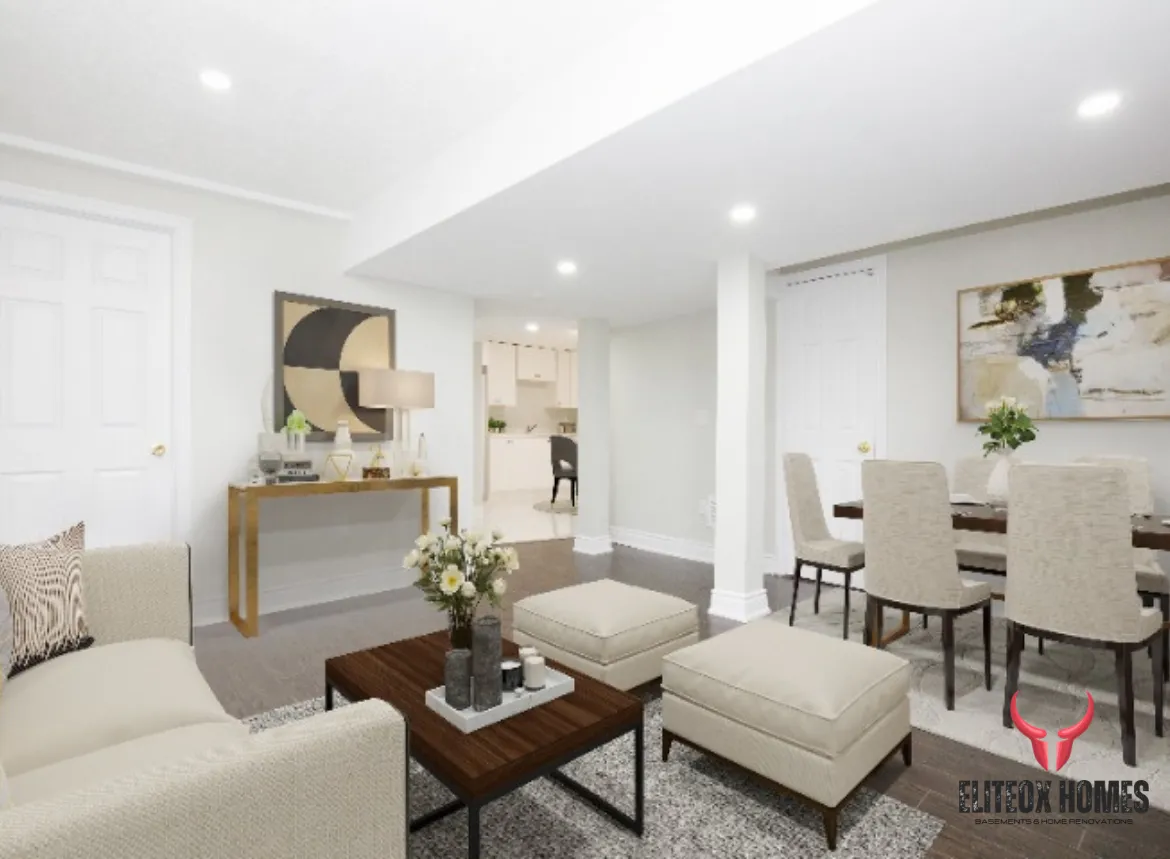
Basic finished basement (open rec room, no plumbing) | $45,000 – $65,000 |
Finished basement with bathroom and bedroom | $60,000 – $85,000 |
Full legal basement suite (kitchen, separate entrance) | $80,000 – $115,000 |
Anyone quoting you far below these numbers is leaving something out — usually the permit, the HST, or the finishing. We'll get to that.
What About Cost Per Square Foot?
Short answer: we don't price that way, and you should be wary of anyone who does.
A per-square-foot price without seeing your basement is a guess. A small basement with a bathroom, kitchen rough-ins and a lot of plumbing can cost more per foot than a big open rec room. What drives the price is the work involved — walls, plumbing, electrical, entrances — not just the floor area.
For a rough sense of scale, most of the basements we finish are in the 600–1,100 sq ft range.
Where the Money Goes
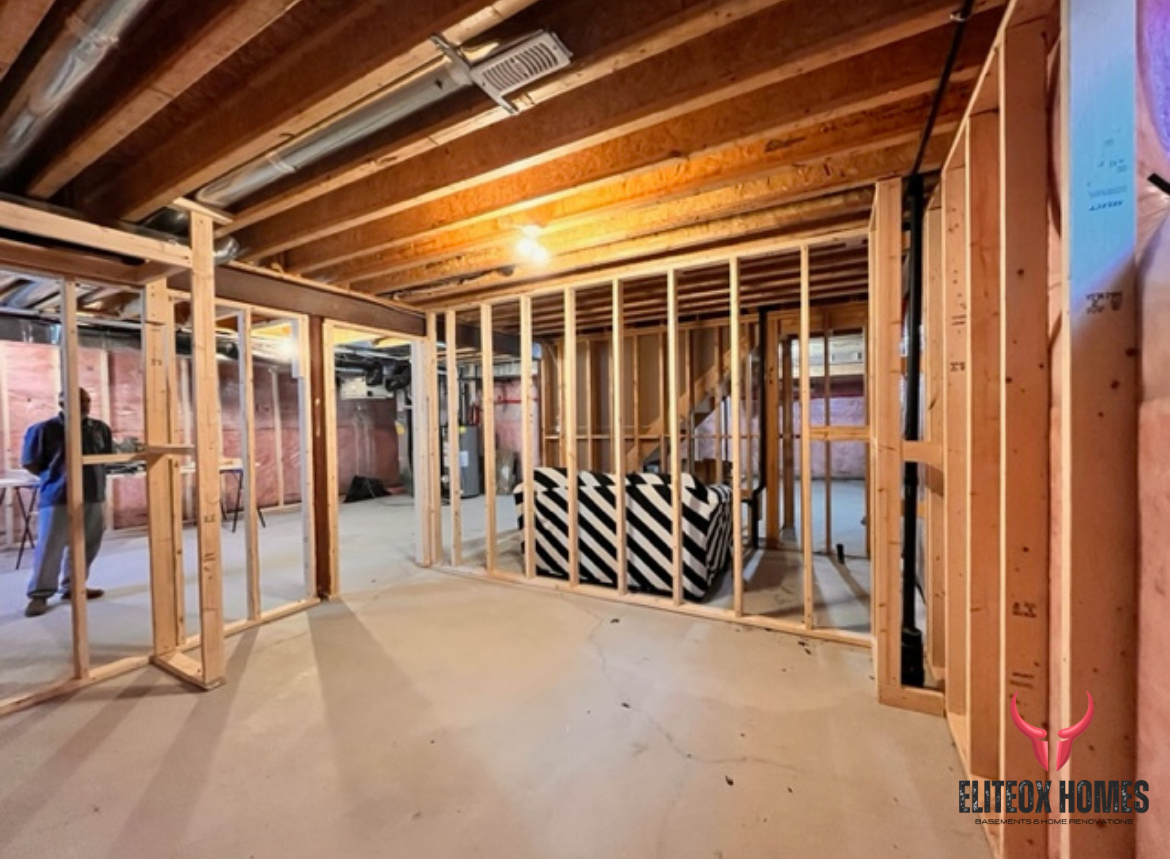
Framing, insulation, drywall. This is the shell of the project — walls, bedroom partitions, bulkheads around ductwork, insulation, then mudding and taping. Usually the single biggest labour block.
Electrical. More than just pot lights: new circuits, receptacles, interconnected smoke alarms, and sometimes panel work. If your panel needs upgrading, budget for it — we'll flag it at the site visit, not halfway through the job.
Plumbing and the bathroom. Bathrooms are the most labour-intensive part of any basement. Concrete cutting, underground drains, waterproofing, tile, fixtures, ventilation. If your basement already has plumbing rough-ins in the right spot, you're ahead. If the bathroom has to move across the basement, that changes the budget significantly.
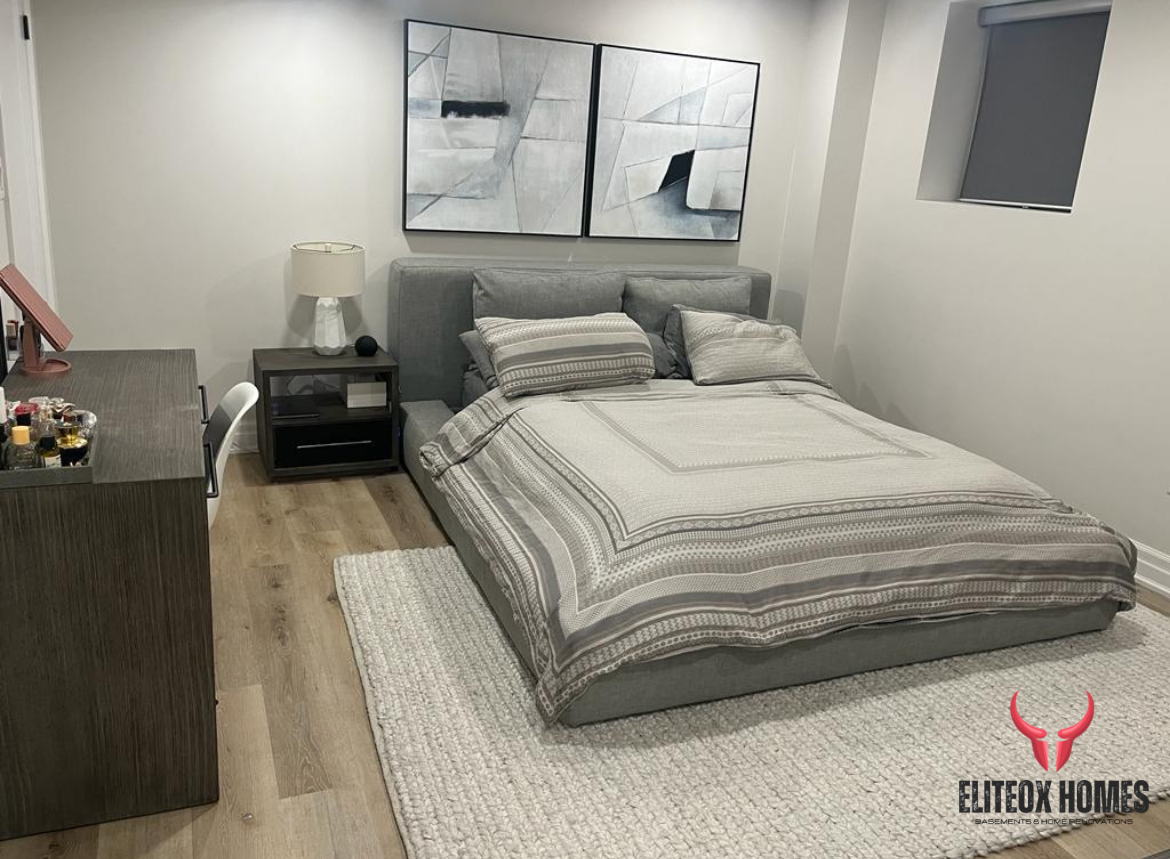
Flooring and finishes. Luxury vinyl plank is the workhorse down here — durable, handles moisture, looks good. Then doors, trim, baseboards, paint. These details are what separate a professional job from one that looks DIY.
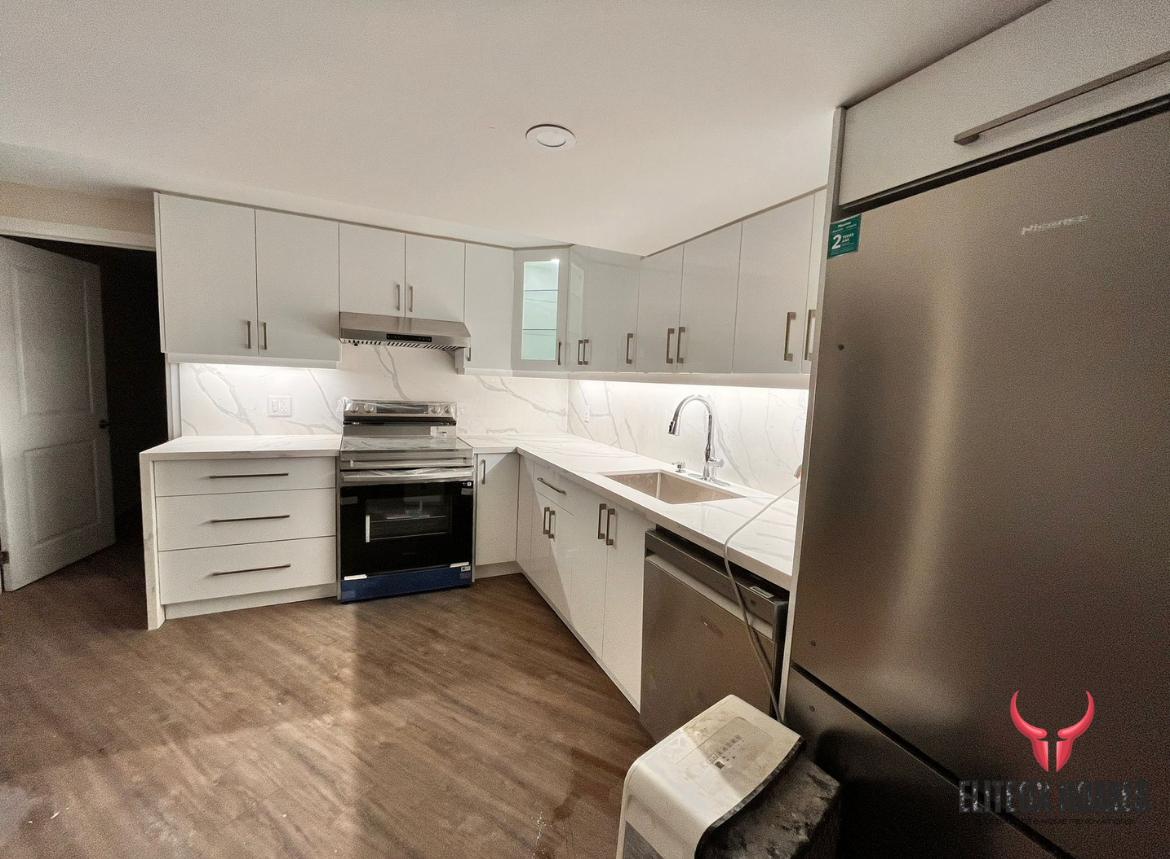
Kitchen (legal suites). Cabinets, counters, appliances, plumbing and electrical for the kitchen — this is a real chunk of a legal suite budget.
What Pushes the Price Up
Layout matters more than size. An open rec room is cheap per foot. Every wall, door, bathroom and kitchen you add costs more — but also adds more value and rental potential.
Legal suite requirements. Fire separation, egress windows, interconnected alarms, a separate entrance — these are real costs. A dug-out entrance with stairs is a much bigger job than a simple side door. But a legal suite in this area rents for $1,800–$2,400/month, so the payback math usually works.
What's behind the walls. Older homes sometimes need beam or post work, waterproofing, or foundation crack repairs before finishing starts. A good contractor finds this during the site visit.
Ceiling height. If you're planning a legal suite, ceiling height gets checked against the Ontario Building Code — the 2024 code has specific minimums for secondary suites. Measure before you fall in love with a floor plan.
Your finish choices. Standard materials vs. custom millwork and designer fixtures — decide what matters to you before we start, and put the money there.
Legal Basements: What "Legal" Actually Means
A nicely finished basement is not automatically a legal basement. A legal secondary suite has to meet Ontario Building Code and your municipality's zoning: proper exits, fire separation between units, alarms, ventilation, ceiling heights — plus a building permit and inspections.
Permits. For a legal suite, the permit isn't optional. Requirements vary by municipality, so check with your local building department — or ask us, we handle permits for our clients. If a contractor suggests skipping the permit, that's a red flag, and it'll come back to bite you when you sell.
Exits and windows. An existing basement window isn't automatically good enough for a bedroom or a dwelling unit. Window sizes, wells and exit arrangements all get evaluated against code.
Don't finish over a water problem. If there's dampness, cracks or poor drainage, fix it first. Finishing over moisture is the most expensive mistake a homeowner can make.
How to Read a Basement Quote (and Spot a Bad One)
Too cheap is a warning, not a deal. If one quote is $25,000 under everyone else, something's missing.
Vague allowances kill budgets. "Allowance for flooring" with no number attached is where costs quietly double. Ask for a detailed scope of work with fixed line items.
No permit mentioned? Walk away — especially for a legal suite.
Payment terms in writing. A normal structure is a modest deposit upfront — typically 10–20% — with the rest tied to defined milestones. Never pay the full amount before work starts.
Compare equal scopes. The only useful comparison is contractors pricing the same work with the same materials.
How Long Does It Take?
A straightforward finished basement: 4–6 weeks. A full legal suite with entrance work and a kitchen: 8–12 weeks. Permit approval is separate — allow a few weeks before construction starts.
Planning Your Budget Without Surprises
Decide what the space is for — family room, guest space, office, or rental suite. That decides the layout and the budget.
Pick your priorities — bathroom and bedroom? Big entertainment space? Full apartment? Lock this in before construction, because changes mid-job are where money burns.
Keep a contingency — 10–20% of the budget set aside for surprises, especially in older homes. It's a planning cushion, not an automatic extra charge.
Get a detailed scope in writing — demolition, framing, electrical, plumbing, materials, finishes, permits, schedule, payment milestones, change-order process. If it's not written down, it doesn't exist.
Basement Renovations Across the GTA West
The construction is similar everywhere, but the house and the municipality change the details.
Milton — a lot of newer homes here, so layouts are often straightforward. Still need to check ceiling heights, rough-ins and mechanicals. For legal suites, confirm zoning and permit requirements before finalizing the plan.
Oakville — mix of newer and established homes. Some need foundation or drainage work before finishing; others are about custom layouts and upgraded finishes. The site visit tells the story.
Mississauga — everything from established detached homes to new developments. Feasibility comes down to the existing structure, plumbing locations and what you're trying to build.
Brampton — lots of homeowners here are building for extended family or a legal rental suite. Permits, fire separation and the approved layout need to be right from the start.
Burlington — family rec spaces, home offices, extra bedrooms, legal suites. Same rule as everywhere: the most reliable budget starts with looking at the actual property.
FAQs
How much to finish a 1,000 sq ft basement in Ontario?
For a typical finished living space, roughly $60,000–$95,000 depending on bathrooms, bedrooms and finishes. A legal suite with a kitchen and separate entrance runs higher.
What's the cheapest way to finish a basement?
Keep the layout simple, don't move plumbing, use practical materials, and skip structural changes. But never cut corners on waterproofing, electrical, insulation or permits — that's where cheap gets expensive.
Do I need a permit to finish my basement?
Usually yes — especially with structural changes, new plumbing, or a legal suite. Check with your municipality before starting.
Does a legal basement need a separate entrance?
Not in every configuration — it depends on the approved exit arrangement and code requirements. A separate entrance is common, but the design has to be evaluated for your specific property.
Can my existing finished basement become a legal apartment?
Possibly, but it'll likely need upgrades: ceiling height, exits, fire separation, ventilation, plumbing. A site assessment will tell you what's needed.
Does a bathroom add a lot to the cost?
Yes — it's the priciest room per square foot. Plumbing, drainage, waterproofing, tile and fixtures add up, especially without existing rough-ins.
Is a basement renovation worth it?
A well-built basement adds real living space and resale appeal, and a legal suite can bring $1,800–$2,400/month in rental income. Just evaluate it honestly — as a lifestyle upgrade and a long-term investment, not a guaranteed flip profit.
Get a Real Number for Your Basement
Online estimates can't see your basement. The only way to get an accurate price is a site visit — measurements, ceiling height, panel capacity, plumbing locations, and what you want the space to do.
We offer a free on-site consultation across Milton, Mississauga, Oakville, Brampton, Burlington and surrounding areas (about a 50 km radius). You'll get a detailed written scope with fixed pricing — not a guess.
Call us or Text us on: +1 905-902-4307
WhatsApp us on: +1 905-902-4307
EliteOX Homes Inc. — Basements, washrooms and full home renovations. 905-902-4307 | [email protected] | eliteoxhomes.com